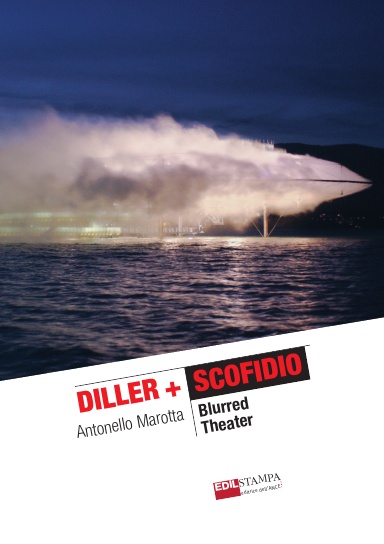
The movements we make with
water.
There are three of them.
Swimming/surfing on the surface is the first
movement. This is a well-known attitude of which, indeed,
I gave some previews in the first part, and we could go
on. But it is one thing to swim, which serves to see
horizons and profiles, and another thing to surf, which
serves to pirouette and be ready to leap into the next
wave. Now, this has always seemed to me, how shall I put
it, an end in itself.
The other two fundamental movements
are diving in and, above all, jumping.
1.
Swimming/Looking.
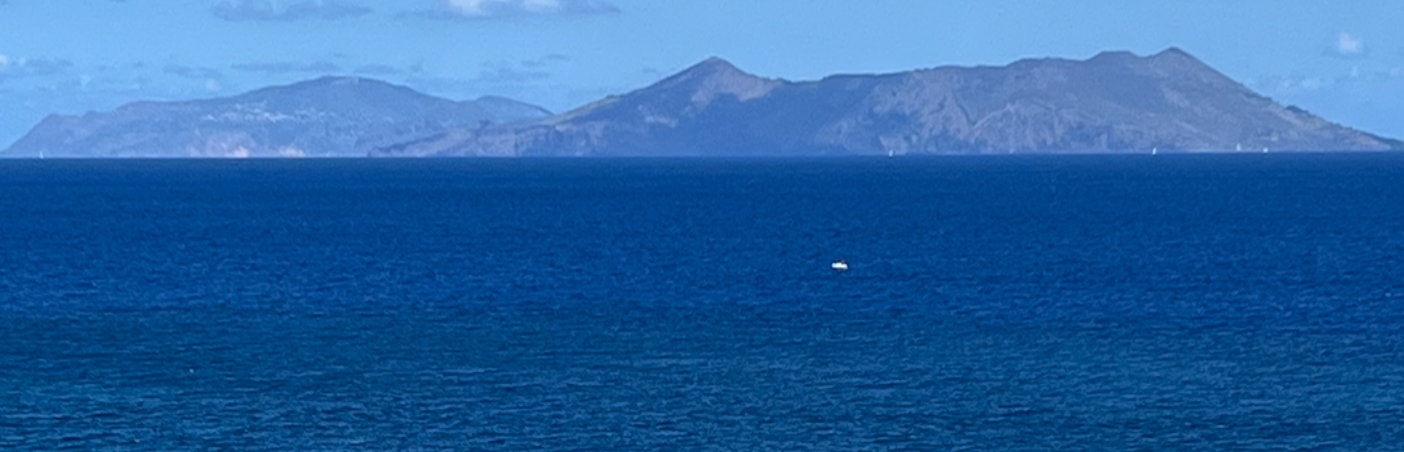
Lines are drawn, profiles are
made, coastlines are observed. These images, like
the following ones, are from 'Amerzone' (Casterman), by
author Benoît Sokal.

Of landscape, nature, and water
in this context.
"Landscape, as a fundamental
paradigm of architectural creation, has become a key
reference term, thanks in part to this line of
reflection on residual spaces. Post-industrial,
electronic-age humanity can now re-evaluate its
relationship with nature; for while the
manufacturing industry sought to dominate and
exploit natural resources, the information industry
can add value to them. At least in technologically
advanced countries, this structural shift opens up
an opportunity for a 'compensation' of historical
proportions. In areas often built to extremely high
densities, we can now inject greenery, nature, and
leisure facilities. But beware: this is not about
circumscribing and fencing off green areas to
contrast them with residential, commercial, or
administrative zones, as was the logic of
organizing-by-dividing in the industrial city. On
the contrary, it is about creating new, integrated
urban fragments where a strong presence of nature
coexists with the interacting set of activities
characteristic of the information society. Here too,
the tools change. If zoning was the method used to
plan the industrial city through division into
homogeneous, distinct zones—mimicking the Taylorist
concept of industrial production—multi-functionality
and integration have become the necessity of the
information city and its new anti-zoning areas.
Moreover, information technology not only creates
these opportunities but also enables their
realization: interactive lighting, information,
sound, and control systems that make these new urban
fragments active, lively, participatory, and rich in
events.
The nature toward which this
conception of landscape looks is no longer the
floral or Art Nouveau style, nor even that of the
masters of organicism. It has become much more
complex, much fiercer, much more 'hidden,' as
Heraclitus once said. Architects explore it with an
anti-romantic eye through the new formalisms of
contemporary science (fractals, DNA, atoms, the
leaps of an expanding universe, the relationship
between life and matter). In short, the category of
complexity. In this context, figures of flows,
waves, whirlpools, crevices, and liquid crystals
emerge, and Fluidity becomes the
keyword. It describes the constant flux of
information and brings architecture face-to-face
with the most advanced frontiers of research, from
biology to engineering, and into new, fertile areas
of overlap such as morphogenesis, bioengineering,
and so forth."
From A. Saggio, "A
Manifesto for an Architecture of Information. New
Substances: Information Technology and the Renewal of
Architecture", "Il Progetto" n.6, January 2000, pp.
32-35.
2. Immersion.
An immersion in search of the essence of substances—and
the substance of renewal is information technology."
 ù ù
"Next-generation architects are
working to understand how the dynamic, interconnected, and
mutable models at the very heart of the information
revolution can transmigrate into an architecture that
serves as their reification. If this research constitutes
the horizon of a new phase of architecture, its raw
material—the water that nourishes this research and moves
in waves, whirlpools, eddies, and waterfalls—is called
information. The raw material of a new phase of
architecture."
From Antonino Saggio, "Information: The Raw Material
of Architecture", Op. Cit., n. 118, September 2003,
pp. 5-10 and A.S., Thoughts
On the Information Technology Revoluzion in Architecture,
Vita Nostra Edizioni, Rome 2023
"If in computer science data do not
exist, but only information, then in IT everything is in
formation [in the process of taking shape]. This
phrasing touches the core of the problem: that information
is truly 'in formation'—in constant, dynamic,
inexhaustible movement and becoming! It also tells us that
the realm in which this occurs is precisely the electronic
one.
Therefore, information is, by definition, a fluid mass
that has 'yet' to take shape.
And here the Zingarelli dictionary comes to our aid: to
inform means 'to model according to a form' and
information represents 'the acts' of this modeling (Nicola
Zingarelli, Vocabolario della lingua
Italiana, 10th ed., Zanichelli Bologna 1970).
Hence, we arrive at formulation [6]: if in IT everything
is in
formation, the shaping of information is defined as
modeling, and it expresses itself through the creation of
models.
The model is then the form that information assumes, the
form into which information is modeled."
From Antonino Saggio, "Information: The Raw Material
of Architecture", Op. Cit., n. 118, September 2003,
pp. 5-10 and A.S., Thoughts On the
Information Technology Revoluzion in Architecture,
Vita Nostra Edizioni, Rome 2023.
Here the translation already
Exists:
 3. But it is the third movement that is
the fundamental one, it is that of the jump. Jumping.
3. But it is the third movement that is
the fundamental one, it is that of the jump. Jumping.
/Conferenze/Biosphere/salto.jpg) S S
I have spoken about this far too
many times lately. Perhaps it is worth remembering only
this:
"Thus, it is proven that there is
no absolute space and time at all, but rather that each
system is spatiotemporally autonomous and dependent on
the frame of reference used. This diversity of space and
time across different frames of reference is proven here
in the absence of reciprocal motion—a feature that
distinguishes this demonstration from Einstein’s theory
of special relativity.
On my desktop, I have an image by
Benoit Sokal featuring a whale leaping out of the
water's surface. This image can be linked to the
reasoning on 'how' to perceive another dimension when
one is, in some way, confined to a lower one. In this
specific case, how can a fish, restricted 'solely' to
being inside the water, 'perceive' or understand what
lies outside that liquid, and actually describe or
imagine coasts, gulfs, and beaches? Naturally, as we
have come to understand, it can do so with a leap
outside its own dimension. The figure of the leap is
fundamental to perceiving another dimension and to
understanding—and at the same time, seeing—one's own.
But the impact of the leap is not merely perceptual; it
is not just an incredible broadening of vision and
reason. Above all, it is the beginning of understanding
the rules of other reference systems, of other spaces,
of other times, and most importantly—and here we bring
architecture back into play—of other value systems.
Within this arduous territory, in this atmosphere thin
on oxygen, we are slowly moving: it is the realm of the
quest for aesthetic knowledge. There is enough here, I
believe, to make the move into four dimensions."
From Antonino Saggio, "Time, Time: The First
Dimension of Space" in "Il Progetto" n. 19, 2004
and A.S., Thoughts On the Information
Technology Revoluzion in Architecture, Vita Nostra
Edizioni, Rome 2023.
Here lies the incredible power of
water: it grants us the moment of the
leap, of the change of state—which, as you have
understood, is not merely physical, but perceptual,
physical, and logical.
|

/Conferenze/Biosphere/16mareetorre.jpg) 0
0/Conferenze/Biosphere/24monetvenezia.jpg)
/Conferenze/Biosphere/19.jpg)